

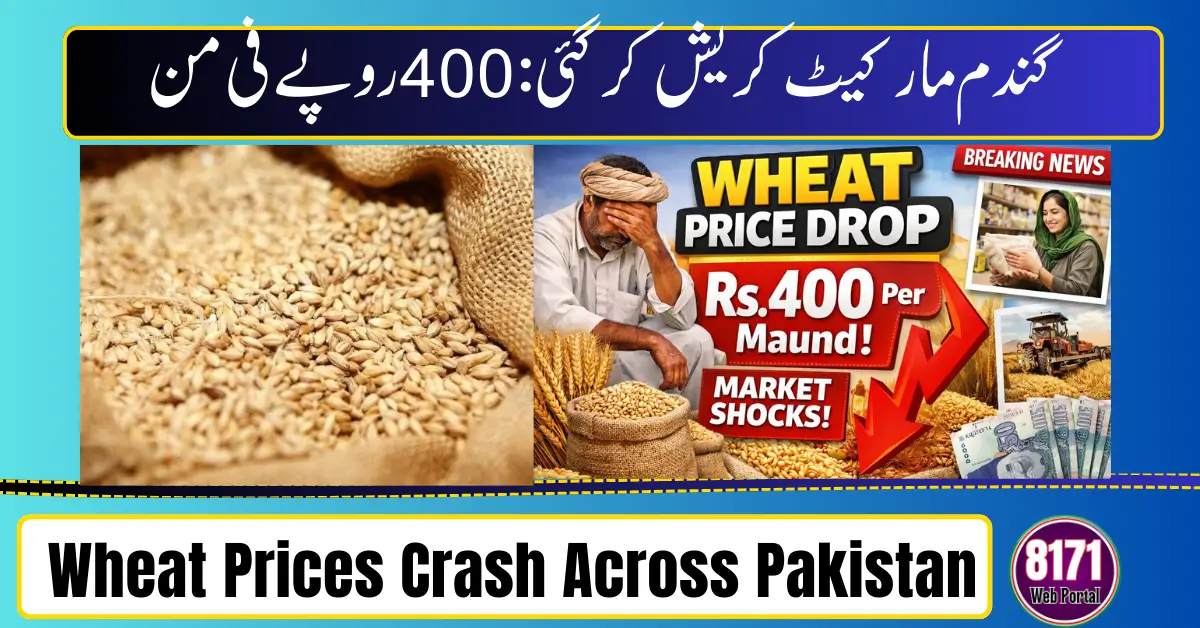
Wheat Prices Crash Across Pakistan as Rs.400 Per Maund Drop Triggers Mixed Reactions
Pakistan’s agricultural market witnessed a major shake-up after wheat prices dropped by Rs.400 per maund, creating waves across farming communities and urban markets. The sudden decline in wheat rates has become a trending topic, as both farmers and consumers respond differently to this unexpected development.
The wheat price drop by Rs.400 per maund is being linked to increased local supply, slow export activity, and government policy adjustments. With fresh wheat arrivals in mandis and improved stock availability, traders have started lowering rates to clear inventories. As a result, average wheat prices in Pakistan are now ranging between Rs.2,800 and Rs.3,100 per maund in several regions, compared to higher levels recorded earlier this season.

Farmers Express Serious Concerns
For wheat growers, the price crash is alarming. Many farmers say the current market rate is below their production cost, especially after rising expenses for diesel, fertilizers, seeds, and irrigation. Small-scale farmers are particularly vulnerable, as they rely heavily on wheat income to manage household expenses and repay loans.
Agricultural associations have urged the federal and provincial governments to announce a fair support price and ensure official procurement through Pakistan Agricultural Storage and Services Corporation (PASSCO) and provincial food departments. Without timely intervention, farmers fear heavy financial losses and reduced wheat cultivation next season.
Consumers Welcome Cheaper Wheat
On the other hand, consumers are viewing the decline in wheat prices as positive news. Lower wheat rates usually translate into reduced flour prices, which directly impacts household budgets. Flour mill owners in major cities have already indicated the possibility of lowering atta prices if the trend continues.
For inflation-hit families, cheaper wheat offers some relief, as wheat flour remains a staple food across Pakistan. Economists believe that a sustained decrease in wheat prices could help slow food inflation in coming months.
Market Outlook and Government Role
Experts suggest that the government must strike a balance between protecting farmers and providing affordable food to consumers. Measures such as strategic procurement, export facilitation, and transparent pricing mechanisms can stabilize the wheat market.
The wheat price drop by Rs.400 per maund has clearly reshaped the agricultural landscape, sparking debate nationwide. Whether this development becomes a long-term benefit or a short-term shock depends largely on upcoming policy decisions and market management.
